Hervey Bay is the one stretch of the Queensland coast where a humpback is not necessarily going anywhere. For most of the migration the coastline is a corridor: the whales swim past it and keep moving. The shallow, sheltered water inside the Great Sandy Strait is different, and in season the whales treat it as a place to stop.
That changes how you plan. The question is not whether a whale will cross your path on a given afternoon, but whether you are in the bay during the months the animals are in residence, and whether you want to be on the water or on the shore.
Why the bay holds whales rather than passing them
Humpbacks move north along the east coast each year to mate and calve on the Great Barrier Reef, then turn south for their Antarctic feeding grounds. Hervey Bay sits on the return leg, and Queensland Parks is direct about what happens there: many whales stop over in what the source calls 'whale-central' and stay for up to a week, resting and playing. The bay is also a breeding ground in the season, with breeding pairs migrating ahead of mothers and calves.
The reason is the water. The Great Sandy Strait is shallow, sand-filtered and sheltered, so there is no ocean swell to work against. A mother with a new calf can rest instead of travel, and a whale weeks into its journey can spend energy on behaviour rather than distance.
The behaviours are worth knowing by name, because a guide on deck will call them out and a headland full of people will start pointing at different things at once.
- Blow — the spout of misted water when a whale surfaces to breathe. Usually the first thing you see.
- Breach — the whole animal leaving the water and falling back. Loud from a boat, visible from shore.
- Tail-slap — the flukes brought down flat on the surface, over and over. Carries a long way.
- Spy-hop — the head lifted vertically out of the water, apparently to look around.
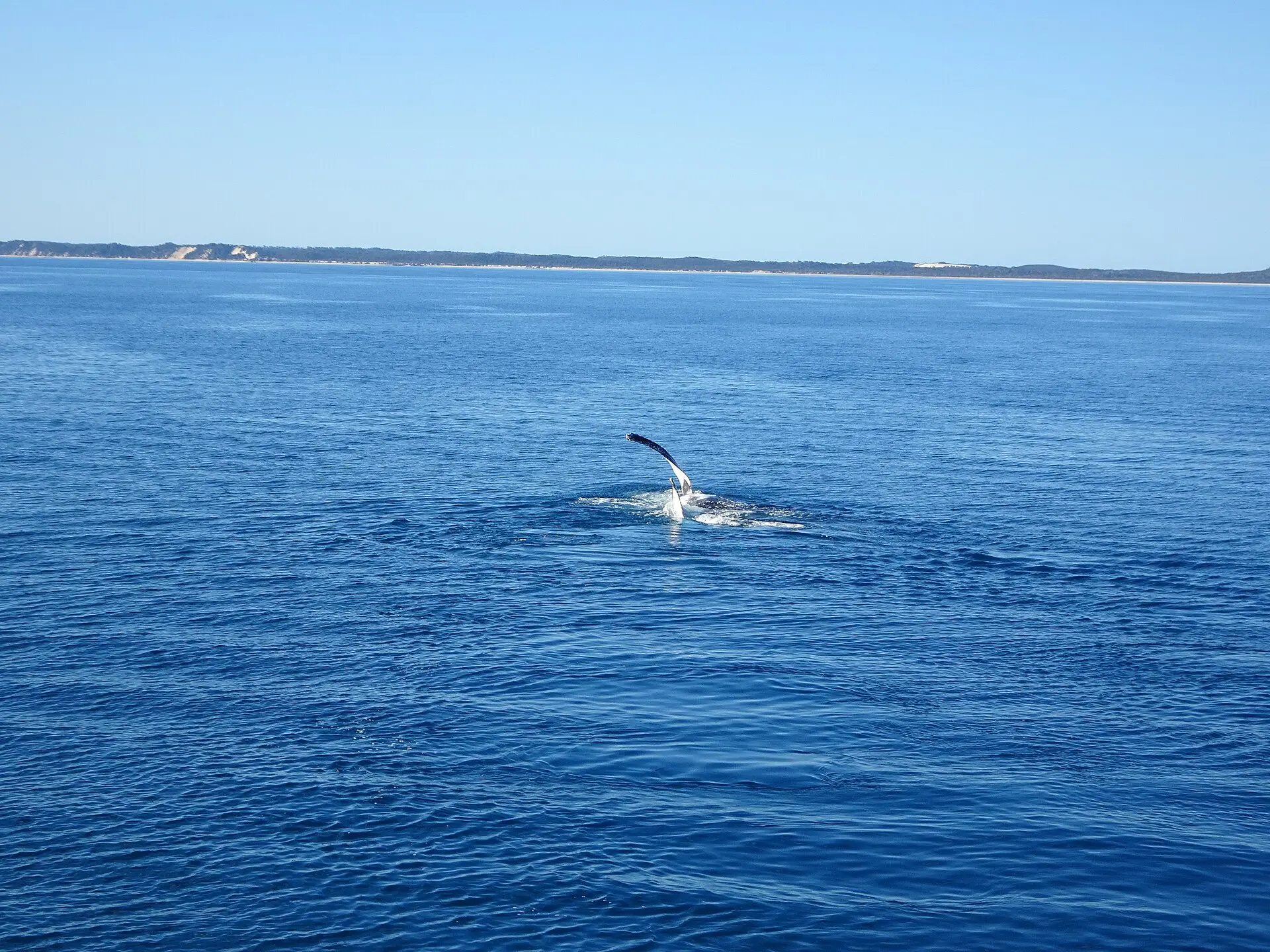
- Fin-slap — a long pectoral fin raised and brought down, often repeated.
The season, month by month
Queensland Parks puts the season at July to November: 'Each year between July and November, the waters off our coast come alive with the spectacular acrobatic displays of humpback whales.' Tours from Hervey Bay and K'gari usually run the same window.
The shape of the season follows the migration. Whales go north first and come south second, so the stop-over behaviour the bay is known for belongs to the back half of the run, when the animals are on their way home.
Treat that as the shape of a season rather than a forecast. The migration is not a timetable, and the operators in town know what has been seen this week.
| Month | Where the migration is |
|---|---|
| July | Season opens. Whales still heading north to the Reef, and tours begin from Hervey Bay and K'gari. |
| August | Northbound movement continues, and the first of the return run reaches the strait. |
| September | The southerly return is under way, and whales begin holding in the bay rather than passing through. |
| October | The return run is established, with mothers and calves among the later travellers. |
| November | Season closes as the last of the run clears the coast for Antarctic waters. |
Boats out of Urangan
Most of the whale boats work out of the Great Sandy Straits Marina at Urangan, at the northern end of the esplanade beside the long timber pier. It is a short drive from the rest of the bay and a walk from the Urangan end of town, which is one reason a campervan based on the esplanade works well here.
Boats also run from K'gari, so if you are staying on the island the trip may start from the western side. Either way, the questions worth asking before you pay are the same.
There is no rental counter in Hervey Bay: vehicles are collected in Brisbane and driven north, so the car you arrive in is also the car that gets you to an early departure at the marina and back to the esplanade afterwards.
- How long the boat is out, and whether that is half a day or most of one.
- How many people are on board, because a crowded deck changes what you can see.
- Whether the trip works the sheltered strait or runs out past the island.
- What happens if the weather turns and the trip is called off.
- Whether there is shade on deck.
Watching from the shore
You do not need a boat to see whales, and on a windy day the shore is the better option anyway. From land you get distance: a blow, a breach, sometimes a tail thrown up and held. What you lose is the close pass. Both are worth doing, and neither is a compromise.
The esplanade runs through Torquay, Scarness and Pialba with parks, seats and easy parking, facing the water the whales are working in. Urangan has the pier, which puts you further out. Point Vernon, at the northern end, is rockier and quieter and looks back down the bay.
Scan for the blow rather than chasing a whale you have already seen. On a calm morning the spout hangs for a second and then flattens. Whales surface in a rhythm, and an animal that has dived usually comes up again in the same piece of water.
| Where | What you are watching from |
|---|---|
| Urangan pier | Out over the water, with the marina and the strait beyond. Best early, before the boats leave. |
| Esplanade at Torquay, Scarness and Pialba | Parkland, seats, shade and parking. The easiest place to spend an afternoon with binoculars. |
| Point Vernon | The rocky northern end, looking back down the bay. Fewer people, wider view. |
Fitting a trip around the tide and the drive
The tide does not set the whale boat. It sets the island. If you are adding a K'gari day, the Eastern Beach scenic drive is only accessible two hours either side of low tide, so the island day is built around a tide table rather than a lie-in.
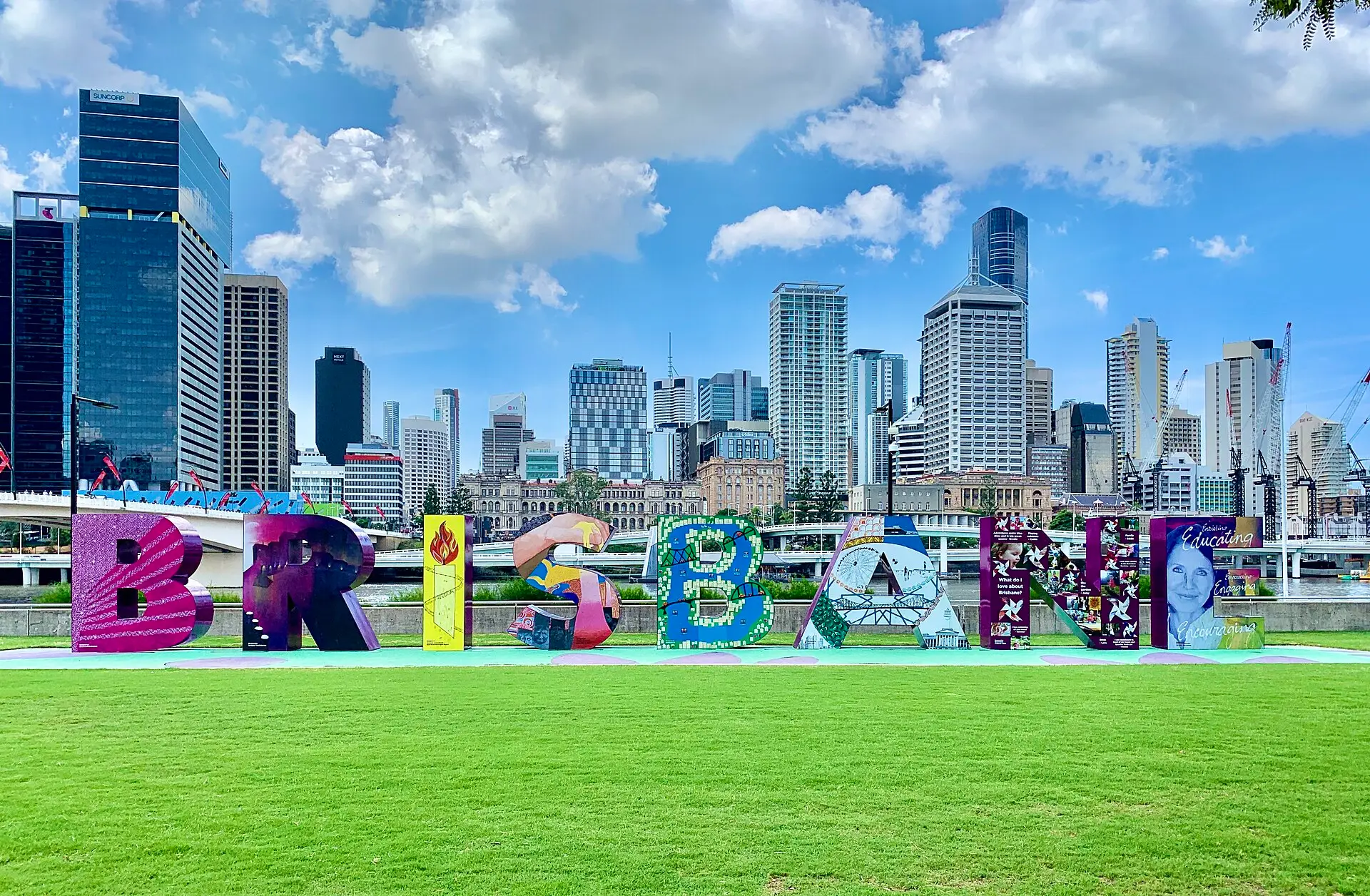
The drive is the other fixed point. Route planners put Brisbane to Hervey Bay at about 290 km and three and a half to four hours, which is a morning if you leave early. Collecting in Brisbane and driving straight up gives you the afternoon on the esplanade — campervan hire in Brisbane is where the vehicle is waiting.
A shape that works for five days:
- Collect in Brisbane in the morning and drive north, with a stop on the way and no ambition beyond arriving before dark.
- Give the first full day to the shore: walk the esplanade, find the pier, learn what a blow looks like.
- Book the boat for the middle day, so there is a day either side to absorb a cancellation.
- Drive back with a night in hand before the drop-off rather than making the return in one run.
Questions
When is whale season in Hervey Bay?
July to November. Queensland Parks describes humpbacks appearing off the coast across that window, and tours from Hervey Bay and K'gari usually run the same months.
Do I need a boat to see whales?
No. The esplanade, the Urangan pier and Point Vernon all look over water the whales use, and a blow is visible from land. A boat gets you close, which is a different thing.
Is a sighting guaranteed on a tour?
No. Whales are wild animals and no operator can promise one. Ask what happens if the trip runs without a sighting before you book.
Which month is best?
Any month in the July to November window can produce whales. The stop-over behaviour the bay is known for belongs to the second half of the season, when the animals are on the return run south.
Do I need a 4WD for whale watching?
No. The marina at Urangan and the esplanade are sealed road. A 4WD only matters if you are adding a K'gari day, where the sand tracks need high clearance and low range.